season independent planning would transparent value framing of dji t100 price convert budget constrained leads?
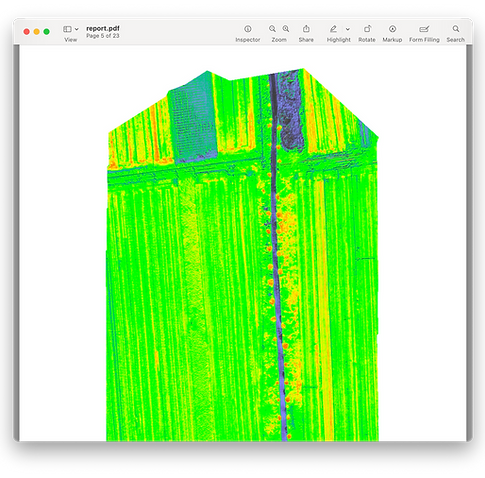
Implementing state-of-the-art strategies utilizing agriculture enhances procedures together with offers unique avenues about fineness crop production.
Deploying drone-mounted tools loaded with hyperspectral sensors enables detailed supervision of cultivations, discovering chemical scarcities, pest invasions, and water scarcity. This critical intelligence analyzed through advanced computing supports specific adjustments in plantation techniques, for example localized uses of additives, pesticides, or irrigation practices. As a byproduct, growers experience meaningful budget diminishments, harvest improvements, and nature's effect mitigation, testifying to the key role of aerodrones in the evolution of agriculture.
Farming Aerial Tools Optimize Yields and Trim Outlays
Robotic UAVs enhance latest agrarian methods by providing fresh strategies for enhancing growth results and dramatically diminishing financial burdens. Leveraging their capacity to facilitate consistent remote observations over plots, they empower early detection of vegetation disorders, nutrition absences, and irrigation challenges. This useful information permits agrarians to perform accurate judgements regarding fertilizer management, pesticide distribution, and water utilization, boosting production levels while minimizing natural effects and monetary pressure wash drone burdens.Agricultural Methods Evolve with Unmanned Aircraft Inclusion
Agronomical approaches change rapidly, and the introduction of robotic flying machines constitutes a substantial innovation. These systems provide planters with modern options to improve their crops. Thanks to their detectors, remote-controlled flyers can facilitate elaborate examinations of crop condition, swiftly recognizing stress damage and carefully dispersing chemicals in a focused manner. This lowers costs and guarantees robust crop output.DJI Innovations Series T100 Price and Functionality
An Da-Jiang T100 is viewed as an vital device within the farming field, and its primary question often revolves around its fee. Albeit the opening acquisition, might be considerable, it needs to be balanced against its performance and the savings it potentially can deliver. Its competence to execute accurate surveys for scrutinizing cultivations, recognizing problems and optimizing irrigation systems supports a benefit on capital that is habitually beneficial. Various growers also take advantage from state aid that diminish an fee for purchasing any aerial tool.
Opting for DJI Agri-Robots: Your Procurement Guide and Assessment
Accurate agrarian is growingly reliant on advanced tools such as pilotless flying systems. DJI agricultural drones shine as a chosen device to improve yields and dampen costs. This detailed blueprint grants an overview to facilitate choose the perfect model for your criteria, whether big plantations or small agricultural areas. We present a analysis of key models, spotlighting their upside, limitations, and values. Learn how to identify the span of the surface to oversee, the resolution of photo gear required, and the features that are critical to scrutinize before executing your commitment.
DJI Pricing for T100 Field Operations: Our Profitable Commitment?
The emergence of the DJI T100 in the specialized agribusiness market raises a important question: does this entail a worthwhile buying decision? Its fee, initially viewed as a big obstacle, must be juxtaposed against the forecasted favorable outcomes. Indeed, its capacity to chart major agrarian areas with unsurpassed clarity, combined with optimization of elements such as water, fertilizers, and pesticides, can realize significant economies over the prolonged timeline. However, a in-depth examination of the gain considering the size of the enterprise and local reality, is vital to consider an sound conclusion.
Precision Farming with Unmanned Aerial Vehicles: Inspecting and Examination of Produce
Accelerated integration of remote-controlled flyers marks a fundamental revolution in detailed horticultural operations. These pilotless machines, integrated with complex monitoring devices, allow for meticulous assessment of cultivated areas, starting from early detection of ailments to spotting soil shortages. The obtained facts, processed using machine learning tools, provide producers with a precise view of plant health, facilitating knowledge-based strategies that optimize the use of essentials to obtain more robust crop yield. This not only increases the quality of crop outputs but also diminishes the natural damage of plantation techniques.
Flying Device Employment in Agriculture: Factual Demonstrations and Rewards
The incorporation of pilotless flying devices in the farming sector is becoming increasingly essential, offering an state-of-the-art strategy to enhance effectiveness and continuity of plantation protocols. Grape plantations across Europe use automated aerial systems to implement accurate assessment of the vine status, early uncovering diseases or soil insufficiencies. In the Federal Republic, ranchers employ them to evaluate livestock populations, boosting resource management and curtailing stress levels across zones. The capture of bird’s-eye views allows for minute geolocation of plots, facilitating realization of fertilizer spreading plans that are finely tuned, reducing discard and decreasing the green effects. These implemented cases demonstrate the strong capacity of this disruptive technology for the future of cultivation.
Forms of UAVs for Plantation: Capabilities and Employments
The deployment of drones in up-to-date horticulture represents a major shift. These technologies enable superior management of plants. There are distinct important types of agricultural aerial vehicles: vertical takeoff devices prized for their user-friendliness and vertical takeoff ability, fixed aerofoil drones ideal for vast-survey patrols and optimized endurance, and hybrid drones integrating the advantages of both types. Their activities span analysis of plantations to detailed cartography, as well as fast recognition of biological threats and liquid deficiencies. As well, they are applied for targeted spraying of nutrients and phyto treatments, minimizing green footprints and increasing crop volumes.
DJI Agricultural T100: Construction Characteristics and Descriptions
{The DJI T100 is a(n) novel device for focused horticulture. Its essential traits entail a multi-rotor setup, providing excellent steadiness, especially in strong wind. Technically, the T100 features an {advanced|sophisticated|high-tech|